// Blog
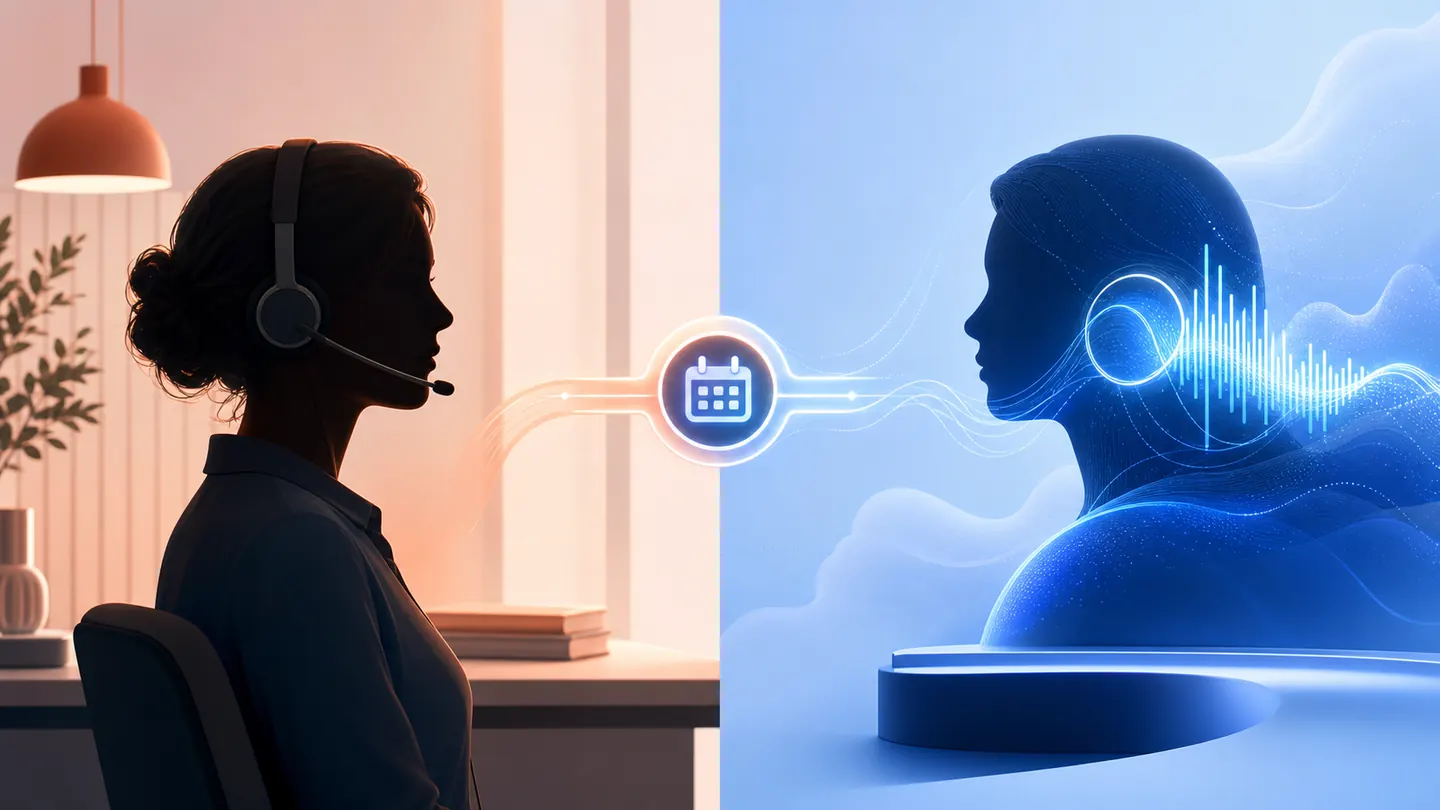
Missed calls can become missed opportunities, but the right solution depends on your call volume, customer expectations, and the complexity of the conversations. The two common options are a human answering service and an AI voice agent. Here is a practical comparison.
What a human answering service does well
A human answering service puts a real person on the line, usually following a script. It can be a strong fit when calls are emotional, sensitive, or difficult to predict. Providers may charge by the minute, by the call, or through service tiers, so the final cost depends on usage and coverage.
What an AI receptionist does well
A well-configured AI voice agent can answer common questions, collect lead details, qualify inquiries, book appointments, and pass information into a CRM or follow-up workflow. Availability, response quality, integrations, and pricing vary by provider and setup.
Where AI may be the wrong choice
AI works best when the call paths, business rules, and escalation steps are clearly defined. Calls that require empathy, unusual judgment, or complex troubleshooting may be better handled by a person. Businesses with low call volume may also find that a simpler callback workflow is enough.
Book a Free Growth Call — Talk through your website, marketing, and lead follow-up with Lumera.
The comparison that matters
Factor | Human Service | AI Receptionist |
|---|---|---|
Availability | Depends on the plan and staffing | Depends on the provider and configuration |
Cost model | Often usage-based or tiered | Often subscription plus usage |
Booking | Available with some providers | Can connect directly to calendars |
CRM updates | May require manual relay | Can be automated through integrations |
Complex calls | Better suited to judgment and empathy | Needs clear escalation rules |
A hybrid workflow can be the best fit
Many businesses benefit from using automation for common questions, lead capture, and booking while sending sensitive or unusual calls to a person. The right balance depends on the customer journey and the situations your team handles most often.
Questions to ask any provider
What happens when a caller asks something outside the approved flow?
Can it book directly into our calendar or only take a message?
How does a human handoff work?
Can we review recordings, transcripts, and outcomes?
What will the service cost at our expected call volume?
Lumera builds AI voice, booking, CRM, and follow-up workflows for service businesses. Book a free growth call and we will help you decide whether an AI, human, or hybrid approach fits your process.
Run a practical pilot before choosing
Write several representative scenarios: a new customer, an existing customer, an unavailable appointment, a request outside scope, and a caller who needs a person. Compare how each option captures the request, explains its limits, and hands the conversation to your team.
Confirm who owns the information, how your team corrects mistakes, and what happens when a calendar or CRM connection is unavailable. Use a defined pilot with authorized test calls before sending real customer inquiries through a new system.
For the wider process, use our website lead follow-up checklist. Explore Lumera’s follow-up automation services when the main issue is routing and coordination between tools.
Put the next step into a clear scope
Lumera connects Growth Marketing & SEO, Social Media & Content, Follow-Up & Automation, and Branding & Creative. Foundation is a one-time setup or improvement project; Growth Partner is focused monthly support; Full Growth System coordinates a broader monthly scope. If your existing foundation is ready, you can start monthly.
Prospecting, cold outbound, advanced follow-up and reactivation or retention engines are added where useful, with responsibilities, fees and platform costs agreed in writing. Explore the engagement options or book a Free Growth Call. The Free Growth Audit quiz can help you identify a starting point.